Built by Operators: Better Care at Home Starts with Better Operations
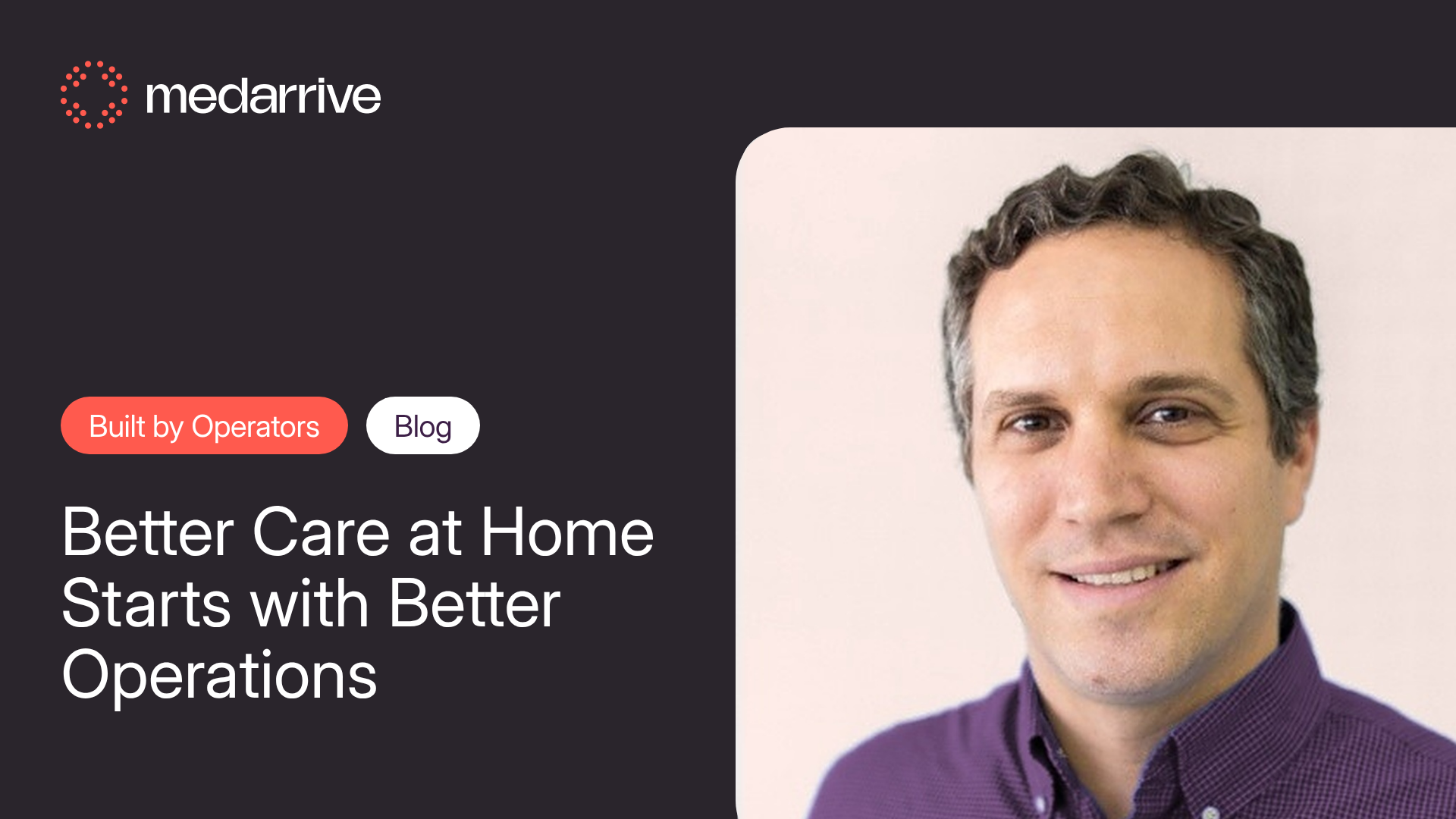
MedArrive was built by healthcare operators who experienced firsthand what it takes to move care beyond the hospital, and this series features the people carrying that foundation forward. Read on to learn how our leaders' experiences continue to shape the platform and why operational intelligence is critical to the future of healthcare. First up, CEO, Ophir Lotan.
Better Care at Home Starts with Better Operations
Throughout my career, I’ve seen the same lesson play out across different areas of healthcare: a great care experience depends on a great operational experience.
I saw it clearly while working in pharmacy, a highly operational, low-margin business that sits at the intersection of three essential stakeholders: providers, payers and patients. Delivering medication to someone’s home may appear simple from the outside. In reality, it requires technology, logistics, benefits coordination and communication to work together seamlessly. When they do, the complexity becomes almost invisible to the patient. That is what makes the experience feel simple and convenient.
I saw a different version of the same challenge in telehealth. New technology could enable entirely new models of care, but creating the capability wasn’t enough. Providers and patients also needed to understand it, trust it and adopt a different way of doing things.
Those experiences deeply influence how I think about MedArrive and the transition home.
Moving care beyond the hospital is not a single clinical decision or administrative task. It is an operating process involving many people, systems and organizations. A patient must be identified as appropriate for the next setting. Coverage and eligibility may need to be confirmed. Capacity must be available. Referrals, equipment, medications, transportation, supplies and visits may all need to be coordinated.
When any part of that process breaks down, the problems compound.
The people responsible for making these transitions happen are not failing to do their jobs. They are being asked to manage enormous complexity through fragmented systems and manual work. Care teams still spend hours reviewing records, completing forms, checking benefits, calling providers and tracking down information. Too much of their expertise is consumed by administrative work instead of the decisions and interactions where they create the most value.
Many people assume the electronic health record manages this process. It doesn’t. It supports important parts of it, but much of the transition remains disconnected. There is also limited continuity once the patient leaves the hospital, which means health systems often lack visibility into whether the next stage of care actually began and what happened afterward.
MedArrive understands this because we started on the home-based care operations side, including supporting complex hospital-at-home programs. We experienced what it takes to coordinate the logistics and services required to deliver care in the home. We also recognized that optimizing care delivery downstream was not enough. The process needed to begin earlier, with better patient identification and a more coordinated transition out of the hospital.
That realization shaped the platform we built, and continue to evolve.
MedArrive connects three critical parts of the journey: identifying and prioritizing the right patients earlier, coordinating their transition to the appropriate care setting, and orchestrating the operational work required to deliver care at home. The information generated through that process can then create a continuous learning loop, improving future decisions and operations.
When we remove friction from the transition home, everyone benefits.
Patients can receive high-quality care in the place they often prefer to be. Hospitals can preserve inpatient capacity for those who most need acute care. Care managers can support more patients while spending less time navigating administrative tasks. In-home care providers can improve capacity, support their teams and accept more appropriate referrals. Payers can help members receive care in a more efficient setting.
The opportunity is not simply to automate another task. It is to connect the entire operating process so the right decision can become the right care, delivered at the right time and in the right place.
That is what “built by operators” means to me. We understand that healthcare transformation does not happen through technology alone. It happens when technology works within the realities of care delivery and makes a complex experience feel coordinated, reliable and simple.